Home

Category

Technology & Politics

20 articles


Borrowed Crowds: The Ancient Art of Manufacturing Mass Appeal

Borrowed Crowds: The Ancient Art of Manufacturing Mass Appeal

From Roman triumphs to modern astroturfing, rulers have always understood that the appearance of popular support matters more than actual popularity. The psychology behind political stagecraft reveals why humans consistently mistake performed enthusiasm for genuine sentiment.

Mercy as Currency: The Hidden Economics of Presidential Pardons

Mercy as Currency: The Hidden Economics of Presidential Pardons

Every mass pardon in history gets sold as mercy by its author and condemned as corruption by its critics, but the historical pattern reveals something more calculated than either. Presidential pardons aren't about justice—they're about purchasing political survival with the only currency that costs nothing to print.

Corruption Was the System: What the Gilded Age Teaches Us About Institutional Rage

Corruption Was the System: What the Gilded Age Teaches Us About Institutional Rage

In the 1880s and 1890s, American voters were not wrong to believe the system was rigged — it genuinely was, in ways that would be difficult to exaggerate. The question was never whether the grievance was legitimate. The question was always who would be allowed to define it, and what they would do with it once they had.

Four Elections, Four Crises, One Question: What Actually Holds a Democracy Together

Four Elections, Four Crises, One Question: What Actually Holds a Democracy Together

The United States has survived multiple moments in which a substantial portion of the electorate refused to accept an election's legitimacy — and it has not survived all of them equally. The difference between the crises that strengthened democratic institutions and the one that did not turns out to hinge on a factor that no constitutional provision can guarantee.

The Pharaoh Who Rewrote a Battle He Nearly Lost — And the Brain That Let Him

The Pharaoh Who Rewrote a Battle He Nearly Lost — And the Brain That Let Him

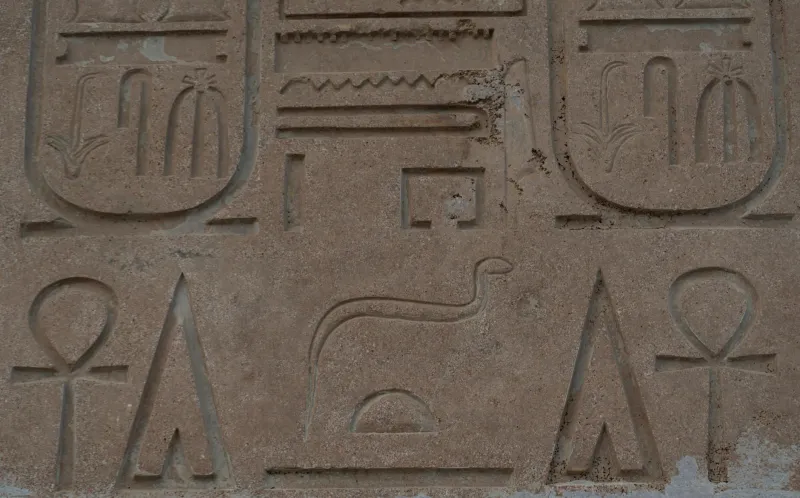
Ramesses II did not win the Battle of Kadesh. He survived it, narrowly, and then spent the next several decades covering every available wall in Egypt with inscriptions describing his magnificent triumph. The psychology that made this work in 1274 BCE is the same psychology that makes it work today, and understanding that fact changes what questions we should be asking about disinformation.

Wealth Has Always Known Where to Hide Inside a Democracy

Wealth Has Always Known Where to Hide Inside a Democracy

Before Elbridge Gerry ever drew a salamander-shaped district in Massachusetts, Roman patricians had already perfected the art of engineering electoral systems that looked democratic on the surface and functioned as oligarchies beneath. The machinery changes. The instinct does not.

The Tribe Is Always There. The Question Is What Wakes It Up.

The Tribe Is Always There. The Question Is What Wakes It Up.

Byzantine chariot fans who burned Constantinople to the ground. Federalists and Anti-Federalists who could not agree on what country they had just built. The psychology of political polarization is not a modern invention — it is a recurring human condition with identifiable triggers, predictable escalation patterns, and a stubborn resistance to the remedies people most want to apply.

Your Neighbor Was Always the Cheapest Surveillance Tool

Your Neighbor Was Always the Cheapest Surveillance Tool

Augustus Caesar discovered what the East German Stasi would confirm nearly two millennia later: the most scalable surveillance system ever devised is not a technology. It is a social arrangement. From Rome's paid delators to the Stasi's 180,000 civilian collaborators, the informant economy runs on ordinary human psychology — and it leaves recognizable marks on every society it enters.

Athens Had a Word for What Is Happening on Your Phone Right Now

Athens Had a Word for What Is Happening on Your Phone Right Now

The ancient Athenians developed a specific term for citizens who weaponized democratic participation to destroy political enemies through mob-driven accusation. They considered it one of democracy's most dangerous internal diseases. Thucydides and Plato both wrote about where it leads. We should read them.

The Republic Has Survived Before: Seven Moments Americans Were Certain It Was Over

The Republic Has Survived Before: Seven Moments Americans Were Certain It Was Over

From the XYZ Affair to the gunfire of 1968, there is a long and largely forgotten tradition of serious, reasonable Americans concluding that liberal democracy in the United States had finally met its end. They were wrong — but understanding why they were wrong is more complicated, and more important, than simply noting that they were.

Madison's Actual Nightmare: It Wasn't the Mob. It Was This.

Madison's Actual Nightmare: It Wasn't the Mob. It Was This.

The Founders are routinely invoked as skeptics of democracy who feared ordinary voters — but that reading misrepresents what they actually wrote and what they had actually studied. Madison and Hamilton were not afraid of the crowd. They were afraid of a specific kind of political operator who had appeared, with remarkable consistency, in every republic they had examined. That distinction matters enormously for how Americans evaluate their politics today.

Manufactured Crisis: What Rome's Debt Wars Teach Us About Congressional Brinkmanship

Manufactured Crisis: What Rome's Debt Wars Teach Us About Congressional Brinkmanship

Rome's Senate fought the same debt battles Congress stages today — complete with theatrical outrage, last-minute deals, and structural problems that never quite got solved. The performance is ancient. So is the outcome. Understanding what these crises actually resolve, and what they permanently defer, is the most useful thing a citizen can do with a history book.

The Founders Feared Political Parties — Then Built the First Ones

The Founders Feared Political Parties — Then Built the First Ones

James Madison wrote one of the most penetrating analyses of partisan psychology ever committed to paper — then spent the following decade organizing a political party. The two-party system Americans feel trapped inside today is not a modern dysfunction. It is the entirely predictable result of a psychological tendency the Founders named with precision and then demonstrated with their lives.

The Rise, Fall, and Resurrection of Digg: A Cautionary Tale About the Internet's First Culture War

The Rise, Fall, and Resurrection of Digg: A Cautionary Tale About the Internet's First Culture War

Before Twitter shaped political discourse and before Facebook became a battleground for public opinion, there was Digg — the website that invented the social news feed and then spectacularly destroyed itself. The story of Digg's rise and fall is not merely a technology story; it is a parable about power, community, and the fragile contract between a platform and its users.